How to DJ an Opening Set Without Blowing the Night
September 2, 2026
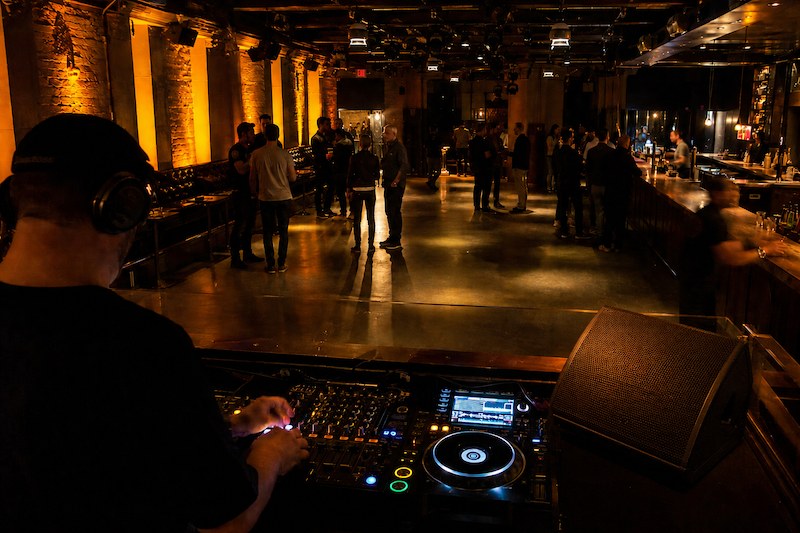
The room is half lit. Two people are at the bar, somebody’s still coiling cable behind the booth, and the promoter is outside on the phone. And someone has to play music for the next ninety minutes.
That’s the opening set. It’s the slot nobody posts about, and it’s the one that quietly decides whether the rest of the night works. A good opener makes the next DJ look like a genius. A bad one hands over a room that’s already tired at 11pm.
Most advice about warm-up sets stops at “play low energy.” That’s not wrong, but it’s not the job either, and DJs who follow it literally end up clearing rooms with slow, joyless records while telling themselves they did it right.
The opener’s job is the room, not the résumé
Every other DJ that night gets to react to a crowd. The opener has to build one.
That changes what a “good” track is. During peak time, a good track is one that makes people react immediately. During an opening set, a good track is one that makes people stay — stay at the bar instead of stepping outside, stay standing near the floor instead of finding a booth in the back corner.
Those are different records. The first kind gets a reaction. The second kind builds a mood people don’t want to leave.
Which is why the most common opening-set mistake isn’t playing the wrong genre. Instead, it’s playing your best material to twelve people. Once you’ve spent your strongest tracks proving you can DJ, you’ve got an hour of set left and nothing to build with.
Energy is a ceiling, not a target
Think of the night as a slope, and think about where you’re leaving the next person.
If you peak hard at 10:30, the DJ after you has two options: start above you, which forces them into their biggest material an hour early, or start below you, which drops the room. Neither is good, and the crowd feels the second one instantly even if they can’t name it.
Leaving headroom is the whole skill. Not just BPM headroom — you want room in density too.
Fewer vocal hooks. Fewer big drops. More groove, more percussion, more space. Track selection people can talk over without noticing the warm-up.
- familiar artist, unfamiliar track
- recognizable vocal with a less obvious remix
- older records people recognize without immediately singing along
- tracks with a strong bassline but no giant drop
- records that can sit under conversation
- tracks that create movement without demanding it
A useful way to plan it: pick the level you want to hand off at, then work backwards from there to where the room actually is right now. Your set is the distance between those two points. You’re not trying to climb every track; you’re trying to make sure the room is somewhere slightly more engaged than it was twenty minutes ago.
Read the room before you read the room
The opener isn’t automatically starting from zero. Maybe the venue opened at 9 and you’re taking over at 9:30. Maybe the previous DJ already has twenty people moving. Maybe the room is almost empty because the promoter hasn’t opened the doors yet. Your job isn’t to follow some preset definition of what an opening set is. Your job is to figure out where the room actually is.
Watch the progression: arriving → staying → drinking → standing closer → moving → dancing.
If people are still filtering through the door, give them something they can settle into. If they’re already standing near the floor and moving, don’t drag the room backward just because you’re technically the opener. And if the room isn’t responding, don’t stubbornly keep playing “warm-up” records because that’s what an opener is supposed to do.
Read the room first. Then decide how much room you have to build.
Ask one question before you touch the decks
A two-minute conversation solves most opening-set problems.
Find the headliner or the promoter and ask where they want to start. Some DJs will tell you a BPM. Others will name a vibe or a track. Some will say “just don’t play anything huge,” which is also a real answer.
While you’ve got them, ask what’s off limits. Playing a track the headliner is known for — their own edit, their remix, the record everyone came to hear them play — is one of the fastest ways to lose the next booking. It doesn’t matter that you didn’t know. Now you know how to find out.
Play unfamiliar, not unlistenable
Here’s a myth worth putting down: warming up means playing music nobody likes yet.
Recognition is a resource, and the opener’s job is to spend as little of it as possible. But that’s not the same as playing tracks with no appeal. Deep and dull are not synonyms. There’s an enormous amount of music that hits immediately without being a singalong — instrumentals with real hooks, dubs and edits of records the crowd half-recognizes, older material that’s familiar in feel rather than in title.
Save the anthems. Spend the grooves.
Watch the door, not the dancefloor
An empty floor at 10pm isn’t a failure. It’s 10pm.
Pace against arrival rate instead. If people are steadily coming through the door, coats going to the coat check, drinks moving across the bar, the room is doing exactly what it should and you keep doing what you’re doing. If the door has stopped and the floor is thin, then something needs to change.
House lights are a signal too. If the venue hasn’t dropped them yet, the staff is telling you the night hasn’t started. Forcing a peak-time moment under full lights rarely works.
Requests at 9:40
Early requests are the loudest ones, because the people making them are the ones who arrived early and have been drinking since doors.
The move that saves most of these: play the artist, not the song. Somebody asks for the record you know is the headliner’s closer, or the one that only works at 1am. You can usually find something by the same artist, or from the same era, that fits where the room actually is. The person feels heard, the floor doesn’t take a peak-time record an hour early, and you keep your ammunition.
If nothing fits, be direct and friendly about it. “That one’s coming later tonight, it’s too big for right now” is an answer people accept, because it’s true.
The stuff only the opener can do
The opener is usually the first person to hear the system loud with people in the room. That’s genuine information, and passing it on makes you the DJ people want on their lineups.
Note where the system starts to distort. Check whether the booth monitor lies about the low end — some do, badly. Note if the mixer’s master is already sitting somewhere strange.
Then tell the next DJ in one sentence when they arrive. It takes five seconds and it makes their first ten minutes much easier.
The reverse also applies: leave the gain structure sane. Don’t hand over channels trimmed into the red and a master pinned. Whatever you had to do to get your levels right, put it back before you step off.
The handoff is part of the set
Ending on your biggest track and then walking away is the equivalent of slamming a door.
Land the plane. Bring your last few tracks to the level you agreed on, tell the incoming DJ what you’re finishing with so they’re not guessing at key or BPM, and get out of their way cleanly.
Pull your USB. Take your headphones. Move your bag out of the booth. Small things, but DJs notice all of them, and DJs are the ones who recommend you for the next gig.
Cocktail hour is an opening set too
None of this is club-only. If you work weddings, corporate parties, or private events, the first two hours are the same job under different lighting.
Cocktail hour and dinner are warm-up sets with a stricter volume rule: guests have to be able to talk without raising their voices. Music that’s too loud during dinner sends people out to the lobby, and once they’ve left the room they’re slower to come back for the dancing. The energy ramp is identical — you’re getting a room from arrival mode to dancefloor mode across a couple of hours, and blowing your biggest records during salad course leaves you nowhere to go at 9pm.
Fix these three things on your next opener
- Decide your handoff point before you play a single track. Agree the BPM and energy level with whoever’s on after you.
- Record the set and listen back to the middle twenty minutes. Not to post it — to hear your pacing. Openers almost always climb faster than they think they did.
- Build a separate crate for warm-up material and stop raiding your peak-time folder. The tracks that work at 10pm are a different collection, and until you have one, you’ll keep reaching for the wrong records.
Nobody’s going to compliment a well-played opening set. The whole point is that it doesn’t call attention to itself. But the promoter notices a room that was already moving when the headliner started — and that’s the booking that comes back.